

Environmental Audits in the UAE: Process, Benefits, Requirements and Compliance Guide
Introduction
Environmental responsibility is becoming an increasingly important part of business operations across the United Arab Emirates. From construction projects and industrial facilities to hotels, hospitals, schools and commercial buildings, organizations need to understand how their activities affect the environment and what measures can be taken to reduce those impacts.
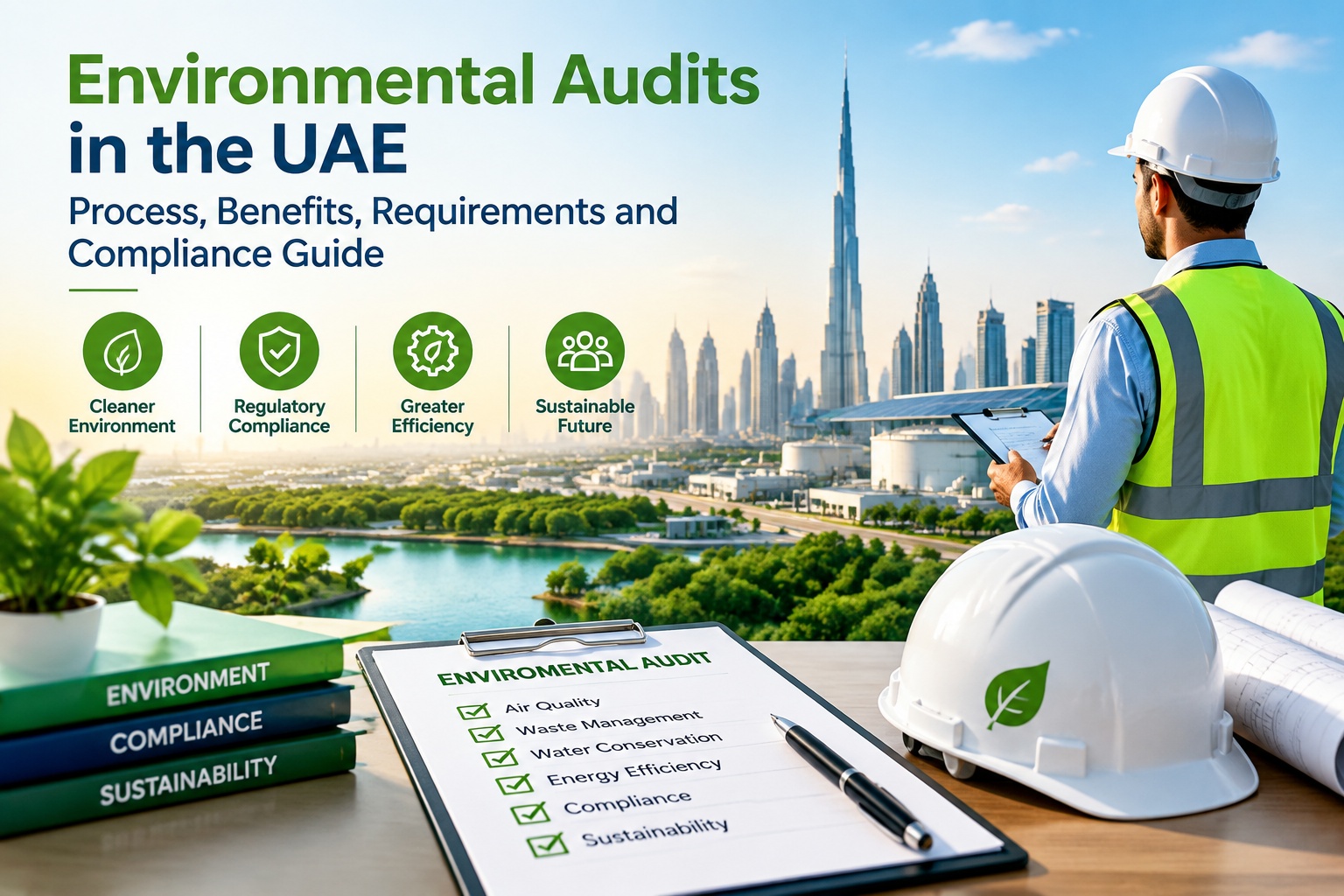
Environmental audits in the UAE help businesses assess their environmental performance, identify potential risks, review compliance with applicable requirements and implement corrective actions. A structured environmental audit can also help organizations improve resource efficiency, strengthen environmental management and support their wider Environmental, Social and Governance (ESG) objectives.
In this guide, we explore what an environmental audit involves, why businesses need one, the key stages of the audit process and how professional environmental audit consultants can support your organization.
What Is an Environmental Audit?
An environmental audit is a systematic assessment of an organization's activities, processes, facilities and environmental management practices. Its purpose is to identify environmental risks, assess relevant compliance obligations, evaluate existing controls and recommend improvements.
Depending on the nature of the business, an environmental audit may cover:
- Air emissions and air quality management
- Waste segregation, storage and disposal
- Water consumption and wastewater management
- Hazardous materials handling
- Noise and other potential environmental impacts
- Energy consumption and resource efficiency
- Environmental documentation and operational procedures
- Emergency preparedness and pollution prevention
The scope of an audit depends on the organization's industry, location, activities, applicable permits and environmental risks.
Why Are Environmental Audits Important for Businesses in the UAE?
Businesses operate within an environmental regulatory landscape that includes federal legislation, emirate-level requirements, permit conditions and sector-specific guidelines. Dubai Municipality, for example, publishes environmental sustainability guidelines and requirements applicable to relevant activities and projects.
An environmental audit helps organizations understand their current position and identify areas that require attention.
1. Identify Environmental Risks
Environmental audits help identify activities that could contribute to pollution, excessive resource consumption, improper waste handling or other environmental impacts. Early identification allows businesses to address issues before they develop into more serious operational problems.
2. Review Environmental Compliance
Audits can assess whether relevant operations, records, procedures and controls align with applicable environmental requirements. This may include reviewing permits, monitoring records, waste disposal documentation and environmental management procedures.
Actual legal obligations vary according to the emirate, activity and facility. An audit should therefore begin with a review of the requirements applicable to the specific organization.
3. Improve Waste Management
An audit can identify opportunities to reduce waste generation, improve segregation, increase recycling and strengthen the handling of hazardous and non-hazardous waste.
Better waste management can reduce unnecessary disposal costs while supporting responsible resource use.
4. Improve Energy and Water Efficiency
Reviewing energy and water consumption can reveal operational inefficiencies and opportunities for improvement. These findings may support energy-saving initiatives, water conservation measures and broader sustainability programmes.
5. Strengthen ESG and Sustainability Performance
Environmental audit findings can contribute to an organization's ESG strategy by providing useful information about environmental risks, existing controls and improvement priorities.
When integrated with appropriate environmental data collection and reporting, audit results can also support sustainability disclosures and performance tracking.
6. Reduce Operational and Reputational Risks
Poor environmental controls can result in operational disruption, additional costs, complaints or regulatory action where applicable requirements are not met. Environmental audits help organizations recognize weaknesses and develop practical corrective measures.
Which Industries Need Environmental Audits?
Environmental audits can benefit organizations across multiple sectors, particularly those with activities that may affect air, water, land, waste generation or natural resources.
Construction and Real Estate
Construction projects may require assessments of dust emissions, construction waste, noise, wastewater, material storage and environmental management plans. Audit scope should reflect project approvals and applicable requirements.
Industrial and Manufacturing Facilities
Industrial facilities may need to assess emissions, wastewater discharge, chemical storage, hazardous waste, pollution prevention and operational controls.
Hotels and Hospitality
Hotels can use environmental audits to review water consumption, energy use, waste segregation, chemical storage and environmentally responsible operating practices.
Hospitals and Healthcare Facilities
Healthcare facilities may benefit from reviews of waste segregation, hazardous material handling, wastewater controls, chemical storage and environmental procedures.
Schools and Educational Institutions
Schools can assess waste management, water and energy use, chemical storage, maintenance activities and other environmental aspects of their premises.
Commercial Buildings and Residential Developments
Building owners and facility managers can review waste handling, water efficiency, energy consumption, maintenance practices and potential sources of environmental impact.
What Is the Environmental Audit Process?
A professional environmental audit generally follows a structured process. The exact activities depend on the audit objectives and the organization's operations.
Step 1: Define the Audit Scope
The auditor establishes the objectives, boundaries, locations, activities and environmental aspects to be reviewed. Relevant permits, legal requirements and previous audit findings are identified.
Step 2: Review Documents and Records
The audit team examines available documentation, which may include:
- Environmental permits and approvals
- Environmental management plans
- Waste transfer and disposal records
- Air quality and wastewater monitoring reports
- Chemical inventories and safety documentation
- Inspection and maintenance records
- Environmental incident reports
- Previous audit reports and corrective action records
Step 3: Conduct a Site Inspection
The auditor inspects relevant operational areas to understand actual site conditions and evaluate whether documented procedures are being followed.
Depending on the scope, the inspection may cover waste storage areas, production facilities, chemical handling areas, drainage systems and other environmentally significant locations.
Step 4: Evaluate Environmental Risks and Compliance Gaps
Information from document reviews, interviews and site inspections is assessed against the agreed audit criteria. The auditor identifies gaps, environmental risks, ineffective controls and opportunities for improvement.
Where required, environmental sampling or measurements may be recommended or undertaken by appropriately qualified personnel.
Step 5: Prepare the Audit Report
The report documents the audit scope, methodology, findings, supporting evidence, identified risks and recommended corrective actions. Findings should be clear, practical and prioritized according to their significance.
Step 6: Implement Corrective Actions
The organization assigns responsibilities, establishes target dates and implements corrective measures. Depending on the findings, actions may involve updating procedures, improving waste storage, strengthening monitoring or modifying operational controls.
Step 7: Verify and Monitor Improvements
Follow-up reviews help confirm whether corrective actions have been completed and whether the changes are effective. Organizations may also establish regular environmental performance reviews to maintain progress.
What Are the Common Findings in Environmental Audits?
Environmental audits frequently identify opportunities to improve operational controls and documentation. Examples include:
- Incomplete waste disposal records
- Improper segregation of hazardous and non-hazardous waste
- Gaps in environmental monitoring documentation
- Inadequate chemical storage or spill prevention arrangements
- Excessive water or energy consumption
- Outdated environmental procedures
- Incomplete environmental training records
- Corrective actions that have not been properly closed out
These are illustrative examples, not findings that apply to every facility. A site-specific audit is necessary to determine the actual issues and suitable corrective actions.
Environmental Audit vs. Environmental Impact Assessment
Environmental audits and Environmental Impact Assessments (EIAs) serve different purposes.
An environmental audit typically evaluates existing operations, environmental performance, management controls and compliance against defined criteria.
An Environmental Impact Assessment generally examines the potential environmental effects of a proposed project or activity and identifies measures to avoid, minimize or manage those impacts.
Depending on the project and the applicable authority's requirements, an EIA, environmental management plan, audit or other assessment may be required. These services are not interchangeable, and the relevant obligations should be confirmed for each project.
How to Prepare Your Business for an Environmental Audit
Organizations can make the audit process more effective by preparing the following information:
- Compile applicable environmental permits, approvals and regulatory correspondence.
- Organize waste management, monitoring and disposal records.
- Update environmental procedures and emergency response arrangements.
- Identify significant environmental aspects associated with daily operations.
- Ensure relevant employees understand their environmental responsibilities.
- Review previous audit findings and outstanding corrective actions.
- Coordinate access to relevant facilities, records and responsible personnel.
Good preparation helps auditors evaluate the available evidence and provide recommendations that are relevant to the organization's operations.
Choosing Environmental Audit Consultants in the UAE
Selecting the right environmental audit consultant is important for obtaining useful, evidence-based findings.
When evaluating a consultancy, consider the following:
- Regulatory knowledge: Familiarity with the applicable federal and emirate-level requirements.
- Industry experience: Understanding of your facility type, operational processes and environmental risks.
- Technical capability: Ability to assess relevant environmental aspects and identify when specialist testing is required.
- Clear reporting: Practical findings supported by evidence and prioritized recommendations.
- Corrective action support: Assistance with improvement plans, documentation and follow-up assessments.
- Integrated sustainability expertise: Ability to connect environmental audit findings with environmental management, ESG reporting and sustainability objectives where appropriate.
The selected consultant should also clarify the audit criteria, deliverables and any required approvals or specialist services before the assessment begins.
Environmental Audit Services by ESG Consultants UAE
ESG Consultants UAE supports organizations seeking to improve environmental management, assess risks and strengthen sustainability performance.
Environmental audit support can complement services such as environmental and sustainability consultancy, Environmental Impact Assessment, waste management consultancy, air quality assessment, carbon management and ESG compliance advisory.
A practical, evidence-based approach helps organizations understand their environmental performance, identify improvement opportunities and establish clear corrective action priorities.
Whether your organization operates a construction site, industrial facility, commercial building, school, hospital or hotel, the audit scope should be tailored to your activities, environmental risks and applicable requirements.
Looking for environmental audit services in the UAE?
Contact ESG Consultants UAE to discuss your organization's environmental audit requirements and identify practical next steps toward stronger environmental management.
Website: https://www.esgconsultants.ae/
Email: info@esgconsultants.ae
Phone: +971 4 239 3639
Frequently Asked Questions About Environmental Audits in the UAE
An environmental audit is a structured assessment of an organization's environmental performance, operational controls, records and relevant compliance obligations. It helps identify environmental risks, gaps and opportunities for improvement.
Environmental audit requirements depend on the emirate, industry, facility, environmental permits, applicable legislation and specific authority requirements. Some activities may be subject to defined environmental assessment or audit obligations, while others may undertake audits voluntarily as part of their environmental management programme. Businesses should confirm their specific obligations with the relevant authority or a qualified consultant.
The cost depends on factors such as facility size, industry, number of locations, audit scope, documentation requirements, site visits and any required sampling or laboratory testing. A consultant can provide a quotation after understanding the organization's requirements.
The duration depends on the size and complexity of the facility, the number of activities being assessed, the availability of records and whether specialist testing is necessary. A defined audit scope helps establish a realistic schedule.
Common documents include environmental permits and approvals, environmental management plans, waste disposal records, monitoring reports, chemical inventories, inspection records, incident reports and previous audit findings. The final document list depends on the facility and audit criteria.
Environmental audits can be useful for construction companies, manufacturers, industrial facilities, hotels, hospitals, schools, commercial buildings and other organizations whose activities may affect the environment. The scope should reflect each organization's risks and obligations.
An environmental audit usually evaluates existing activities and environmental controls. An Environmental Impact Assessment (EIA) generally evaluates the likely environmental effects of a proposed project or activity before or during the relevant approval process, as applicable.
Audit frequency depends on applicable legal and permit conditions, operational risks, industry requirements and the organization's environmental management system. Businesses should follow any prescribed schedule and consider additional reviews after significant operational changes, incidents or recurring findings.
The organization should assess the significance of the finding, determine its cause, implement appropriate corrective actions and verify their effectiveness. Where a legal breach or reporting obligation is identified, the organization should follow the applicable regulatory procedures and obtain professional advice as necessary.
Environmental audits provide evidence about environmental risks, resource use, waste management and operational controls. These findings can help organizations prioritize sustainability initiatives, improve environmental performance and support relevant ESG reporting and monitoring processes.
Conclusion
Environmental audits are a practical tool for understanding environmental risks, improving operational controls and strengthening responsible business practices. For organizations in the UAE, a well-planned audit can support better decision-making, more effective resource management and improved readiness to address applicable environmental requirements.
By combining a clear audit scope, reliable evidence, actionable recommendations and consistent follow-up, businesses can turn environmental assessments into measurable improvements.
Discuss Your Environmental Audit Requirements Today.
Contact Information
Website: https://www.esgconsultants.ae
Email: info@esgconsultants.ae
Phone: +971 4 239 3639